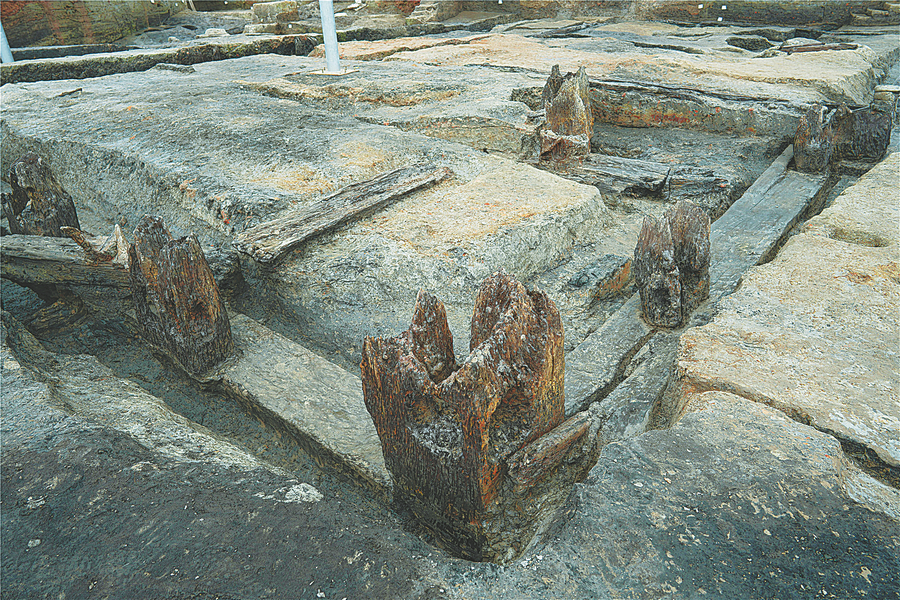
Jijiaocheng Site in Lixian, Hunan
Introduction
The Jijiaocheng Site in Lixian, Hunan province, is a significant archaeological site that dates back approximately 5,000 years. This site has garnered attention not only within academic circles but also among the public due to its inclusion in China's Top 10 New Archaeological Discoveries of 2021. The site is a testament to the early development of Chinese civilization, offering insights into ancient agricultural practices and architectural achievements. Among the most remarkable finds at Jijiaocheng are the remains of a large wooden structure and evidence of substantial rice storage, which together paint a picture of a sophisticated and organized society existing millennia ago.
Historical Background
The Jijiaocheng Site represents a critical era in Chinese history, reflecting a time when early communities began to engage in complex agricultural activities and build sophisticated structures. The site's history is intertwined with the evolution of early Chinese societies that laid the groundwork for later cultural and technological advancements. These early inhabitants of Jijiaocheng were part of a larger network of communities that spread across what is now modern-day China, contributing to the diverse cultural tapestry that has characterized the region for thousands of years.
The site's discovery and subsequent excavation have provided valuable insights into the ways ancient Chinese societies adapted to their environments and structured their communities. Notably, the evidence of large-scale rice storage indicates the importance of agriculture in sustaining and supporting these early populations. Furthermore, the architectural remnants showcase the ingenuity of these early builders, whose techniques would influence generations to come.
Archaeological Discoveries
Excavation History
The archaeological exploration of the Jijiaocheng Site began as part of a broader effort to uncover and understand the origins of Chinese civilization. The site was first identified through surveys and preliminary excavations that highlighted its potential significance. Over the years, systematic archaeological methods have been employed to document and preserve the artifacts and structures uncovered at Jijiaocheng. Each phase of excavation has built upon previous findings, gradually revealing the complex history of this ancient settlement.
The excavation history of Jijiaocheng is marked by the discovery of both expected and surprising elements, from the sheer scale of the wooden structure to the intricacies of the site's layout. These discoveries have required careful analysis and innovative techniques to ensure the accurate interpretation of the site's historical context.
Artifacts Found
Among the most significant artifacts found at the Jijiaocheng Site are the remnants of a large wooden structure, which covers over 600 square meters. This structure is notable not only for its size but also for the exquisite construction techniques employed by its builders. Its discovery has provided archaeologists with a unique opportunity to study ancient Chinese construction methods and the architectural capabilities of early societies.
In addition to the wooden structure, archaeologists uncovered evidence of a barn that once stored at least 22,000 kilograms of rice. This find is especially important because it illustrates the advanced agricultural practices that were in place at Jijiaocheng. The ability to store such a large quantity of rice suggests a highly organized and efficient system of food production and storage, which would have been crucial for sustaining the local population.
Other artifacts discovered at Jijiaocheng include pottery fragments, stone tools and various other implements used in daily life. These items provide further insights into the activities and lifestyle of the site's ancient inhabitants.
Cultural Significance
The cultural significance of the Jijiaocheng Site lies in its ability to shed light on the development of early Chinese civilization. The discoveries made at the site have deepened our understanding of how early communities in the region organized themselves, interacted with one another, and developed technologies to enhance their survival. The evidence of advanced agriculture and architecture highlights the innovative spirit of these ancient people and their contributions to cultural and technological progress.
Moreover, the Jijiaocheng Site underscores the importance of regional diversity in shaping the course of Chinese history. As a center of early innovation, the site demonstrates how different communities adapted to their environments and made unique contributions to the broader cultural mosaic of ancient China.
Preservation and Conservation
Preserving the Jijiaocheng Site is a priority for archaeologists and historians, as it holds invaluable information about the past. Conservation efforts focus on protecting the integrity of the site and its artifacts, ensuring they remain available for future study and appreciation. Techniques such as careful excavation, documentation and the use of modern preservation materials and methods are employed to maintain the site's condition.
Efforts to preserve the site also include public education initiatives aimed at raising awareness about its historical importance. By engaging the public in preservation efforts, archaeologists hope to foster a sense of shared responsibility for safeguarding this cultural heritage for future generations.








